ENSA Paris-Est
Spring Semester 2026
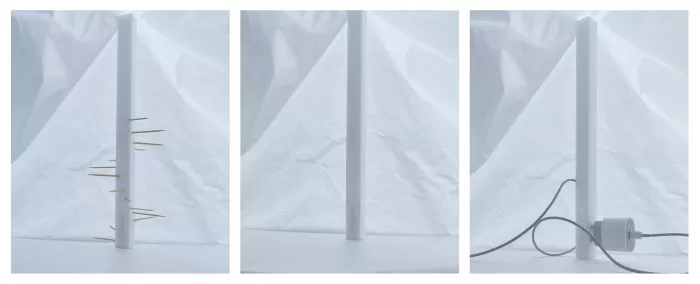
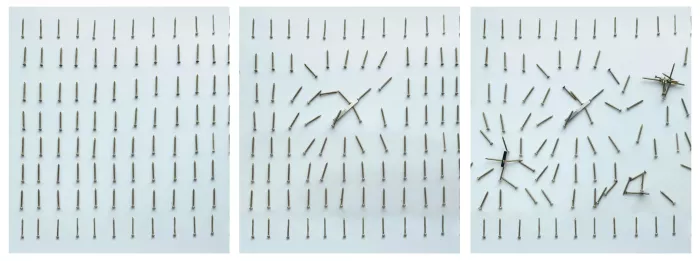
The early universe was smooth, ordered and perfectly uniform, all matter spread equally across space. Like a pencil balanced perfectly on its tip, one singular disturbance was all that was needed to disrupt this fragile state of equilibrium, sending the universe into disorder. Matter collapsed, heat was radiated, gases became stars, entropy flourished. This describes the second law of thermodynamics, first put forward by scientists in the 19th century to understand the concept of entropy: a measure of disorder within an irreversible process that increases towards thermodynamic equilibrium.
This fragile state was exposed with the publication of The Limits to Growth (1972)¹ by the Club of Rome, warning of the dire consequences of exponential growth in the reality of limited global resources. The American artist, Robert Smithson, was fully aware of this context, as an entropic reality, embedded in the environmental movements of the 1960s in which his work took place.
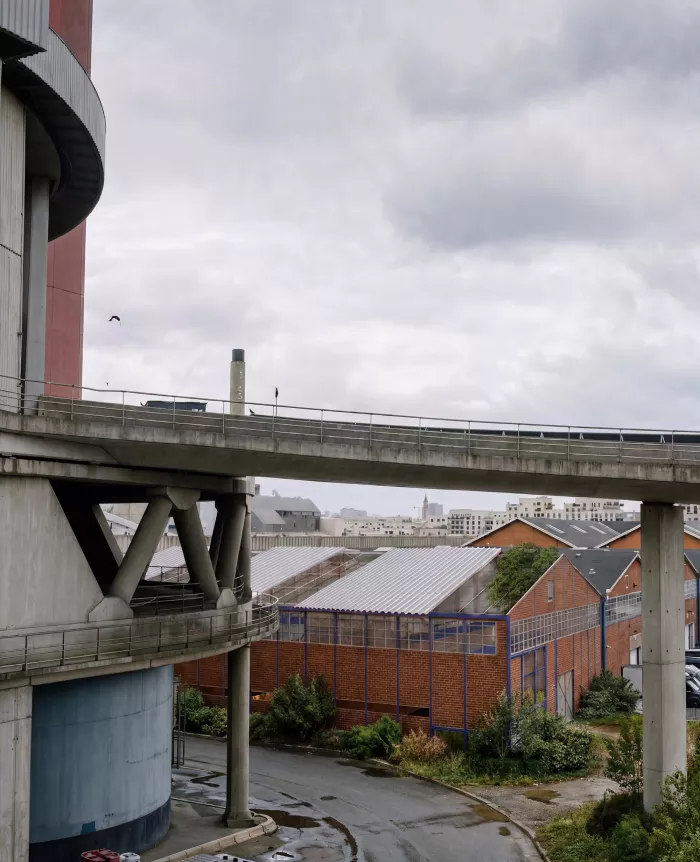
Whereas the early universe was extraordinary, our world today tends towards the ordinary. As entropy increases, rare order moves towards common disorder. In Robert Smithson’s text, A Tour of Monuments of Passaic, New Jersey (1967), he describes the rundown suburban landscapes he visits as ‘ruins in reverse, that is – all the new construction that would eventually be built’. This reversal of the common acceptance of the ruin where ‘buildings don’t fall into ruin after they are built but rather rise into ruin before they build’² evokes the understanding of time within the making of a site. In this way, buildings are already obsolete as they are completed, frozen in a razor-thin present while material, social, and environmental processes keep acting on them. In Entropy and the New Monuments (1966), Smithson states ‘Instead of causing us to remember the past like the old monuments, the new monuments seem to cause us to forget the future. Instead of being made of natural materials, such as marble, granite, or other kinds of rock, the new monuments are made of artificial materials, plastic chrome, and electric light. They are not built for the ages, but rather against the ages.’³
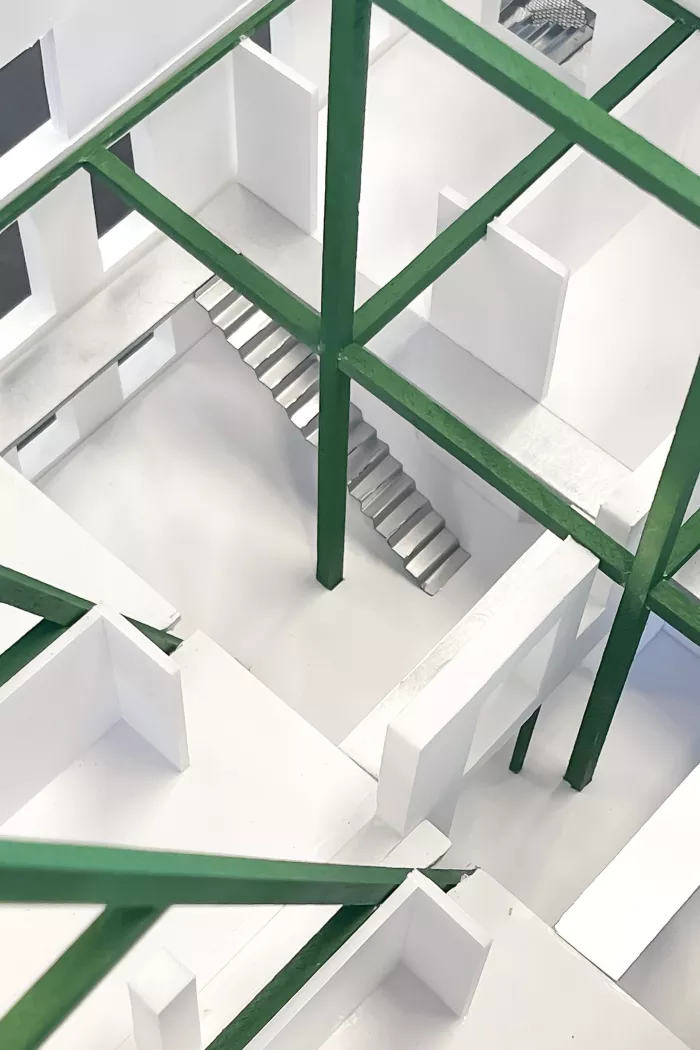
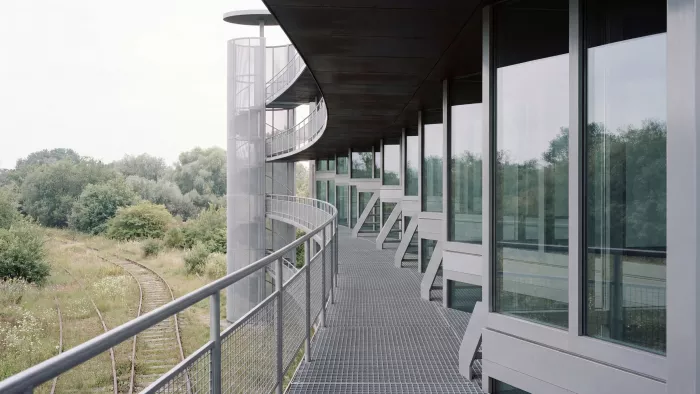
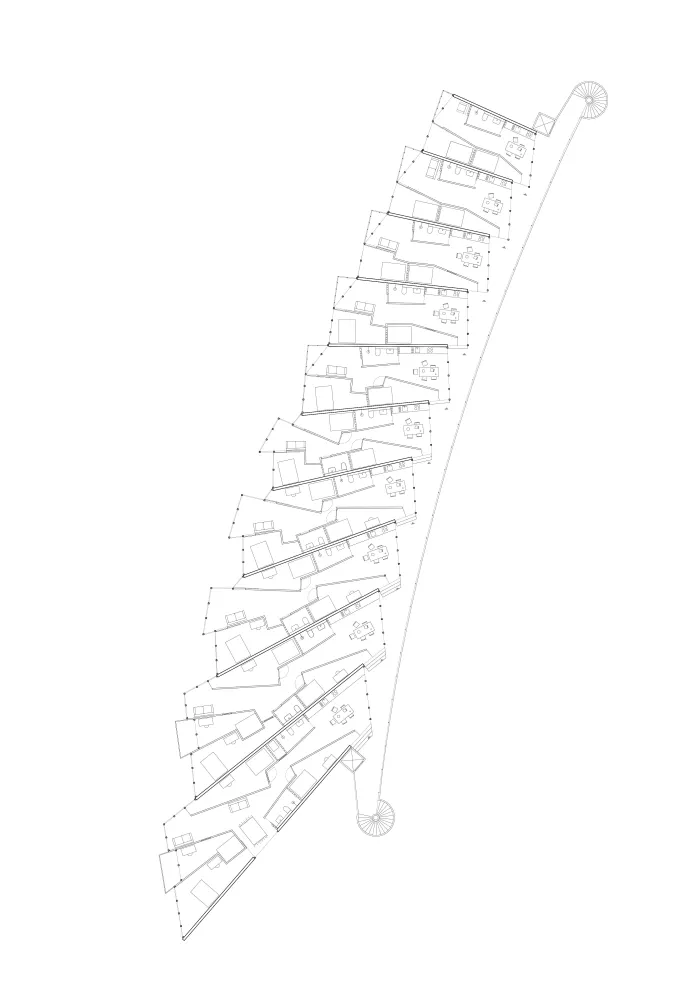
Understanding the state of disorder as the natural equilibrium contradicts the commonly held notion of order as a prevailing aim, asking us to consider the built condition through this same lens. Architecture in continuous transformation, oscillating between states, unstable, unstuck in time. Part of the allure of entropy is its irrevocable irreversibility, combining fatality and certainty with constant change. Instead of producing inert, ahistorical and instantly decaying buildings, what if we obeyed entropy: allowing change, misuse, occupation and weather to inform their design?
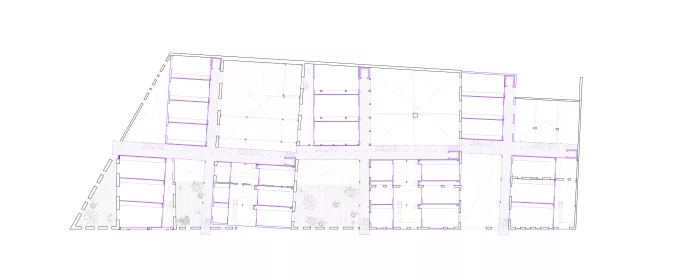
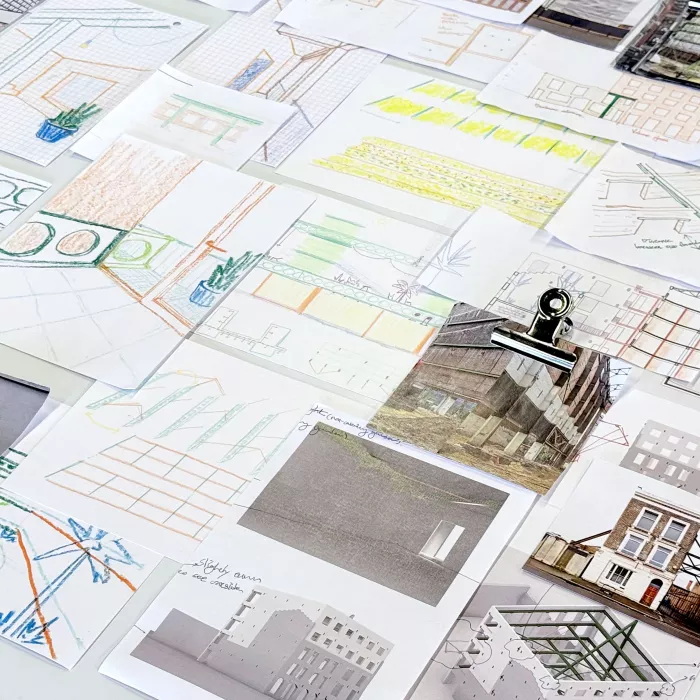
This semester we investigated entropy as a catalyst for questioning modes of living through the perspective of five research themes: permeability, permanence, repetition, hybridity and scale.
Tristan Chadney
Anna MacIver-Ek
Florencia Ignacia Arganaraz Diaz
Myriam Ben Nasr
Ilhem Benderdouch
Elsa Cambonie-De Bouard
Aude Egger
Ioanna Arseni Foteini
Matéo Gelpi
Aristide Givois
Loqman Gustave
Ethel Halimi
Awen Kadi
Houyeme M'Zali
Suren Oganesian
Diane Ouro-Sama
Jiwon Park
Elif Polat
Bastien Pourbaix
Valentin Rousseau
Paul Wessel