Technische Universität München TUM
Summer Semester 2024
Mop the floor, seal that crack on the wall, burn the weed that’s growing in the corner, close the window the wood will get wet, cover up the graffiti, don’t let the dog in.
Sanitation as an excuse for exclusion. Cities developed against nature: dry the marshland, lay down asphalt, put the sick and the dead away, build a wall the foreigners might be dangerous. Sure, hygiene is to some extent a need, yet it also excels at pushing the other aside, the unwanted or unvalued. Mankind and its longing to dissociate itself from the animal: culture versus nature, work versus labour. A way of asserting its dominance or a desperate attempt to escape its condition.
Our age might be defined by our cleaning frenzy. Every client will ask at some point “yes but, is it easy to
clean?” Isn’t the easiest building to clean the one that doesn’t need to be? Do you vacuum a meadow? We’ve spent centuries cleaning and organising our environment. Now the streets are either flooded or too hot, scientists develop artificial alternatives to the dying bees, birds make their nests in the crumbly Styrofoam, ventilation units are installed and window handles removed, desynchronised sensors close the shutters when I want to look at the sunset.
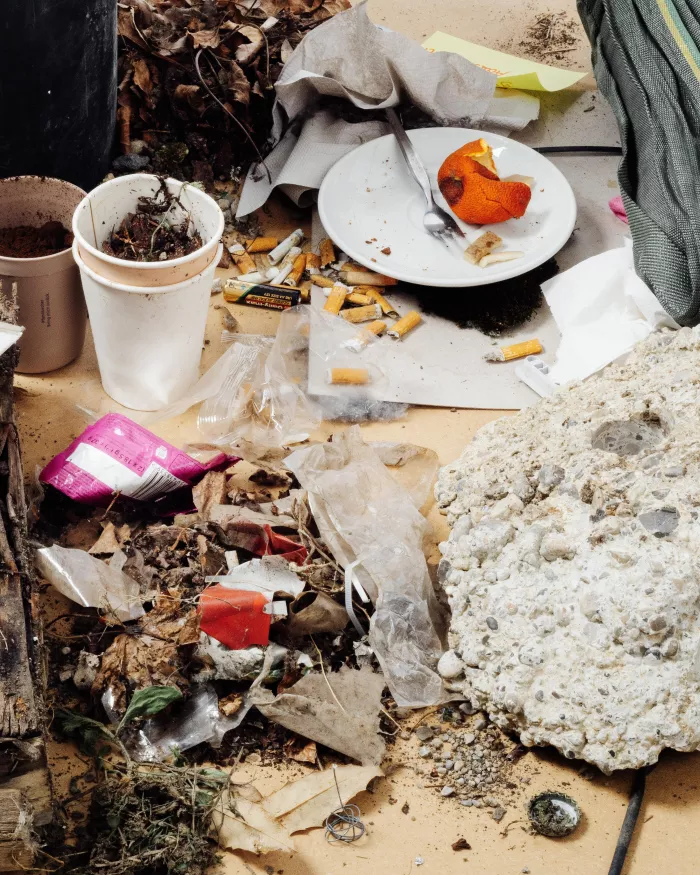
This semester, we play with dirt. An excuse to explore an architecture that welcomes its environment rather than seeks to be secluded from it. Unseal the floor, let the outside in, exhibit the water running through the house instead of hiding it in pipes, value the waste on site instead of shipping it out of sight, let the dog (and its friends) back in, they can jump on the couch, no one will die from it.
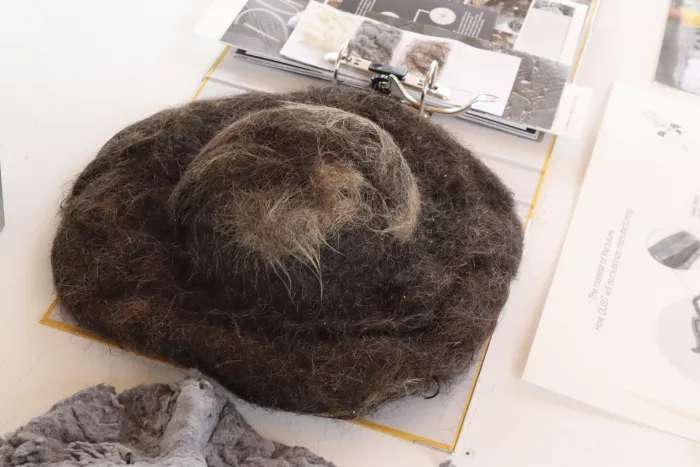
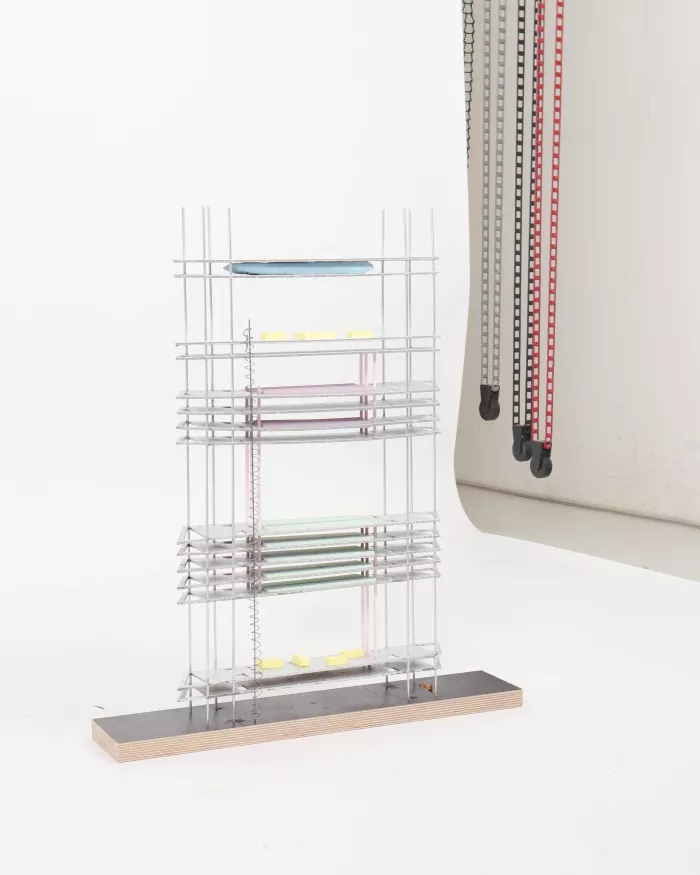
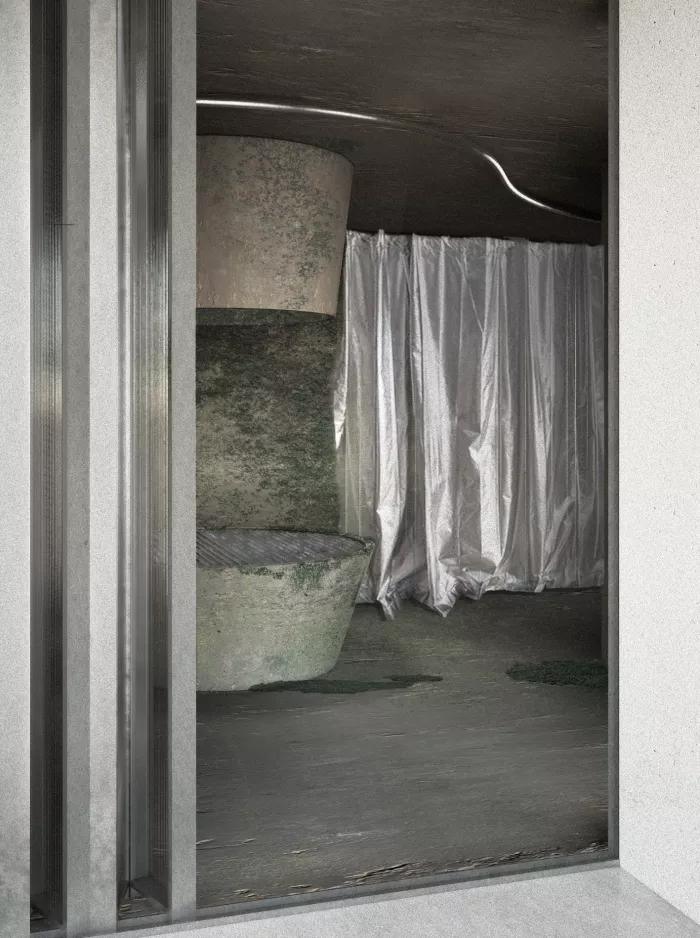
Germs, decay, noise, fat, weeds, mould, draught, damp, pets, shit, soil, smell, mess and dust. Each group received their dirt. Starting by a research folder, they set up an experiment that would develop throughout the semester. Harvesting germs from Munich’s metro stations, recreating the city’s building history through the fragments of bricks that are found in the river, feeding and documenting weeds, or shaping hats out of the dust collected in the school building.
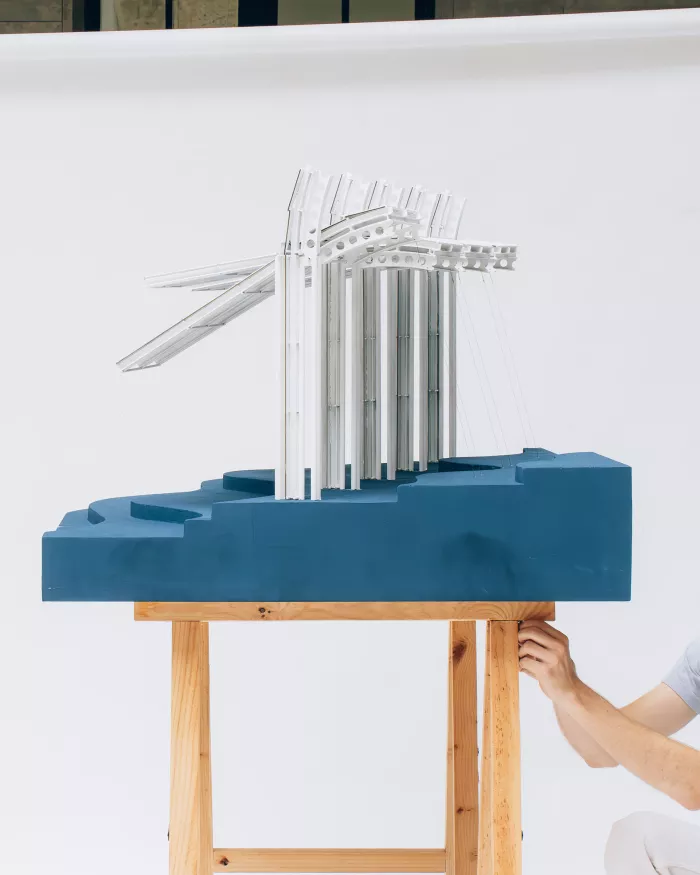
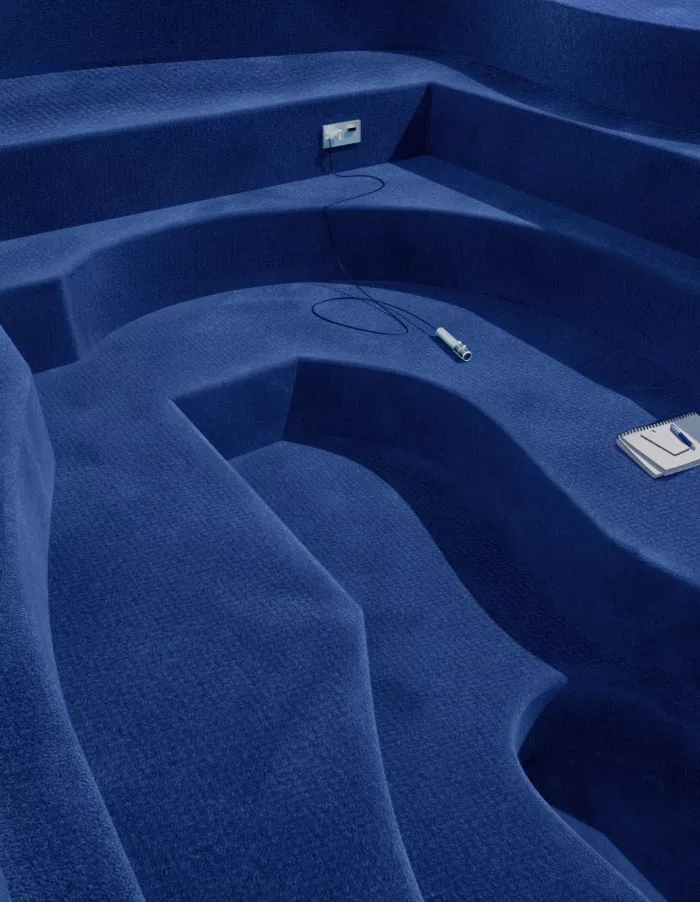
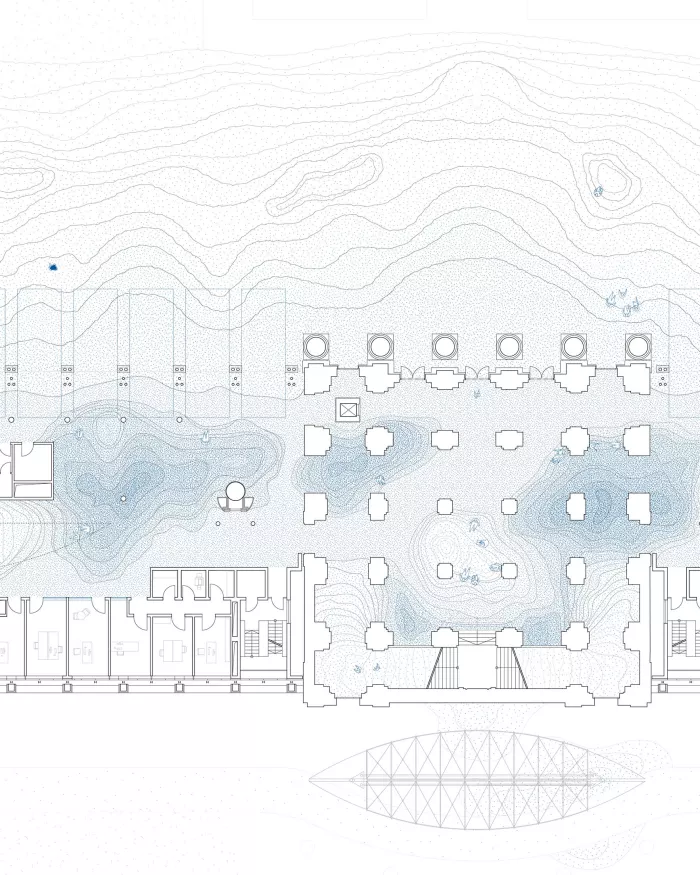
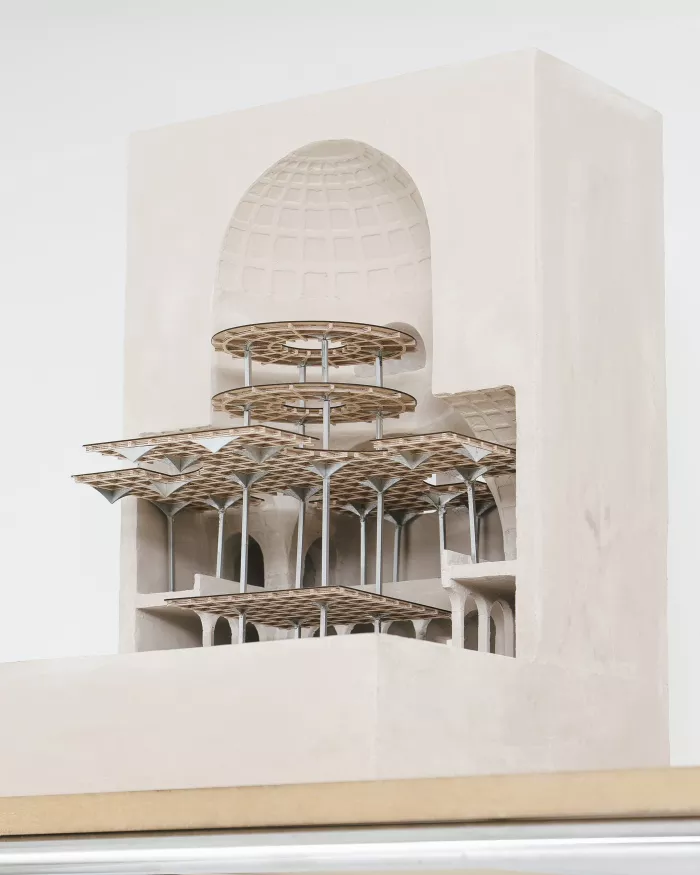
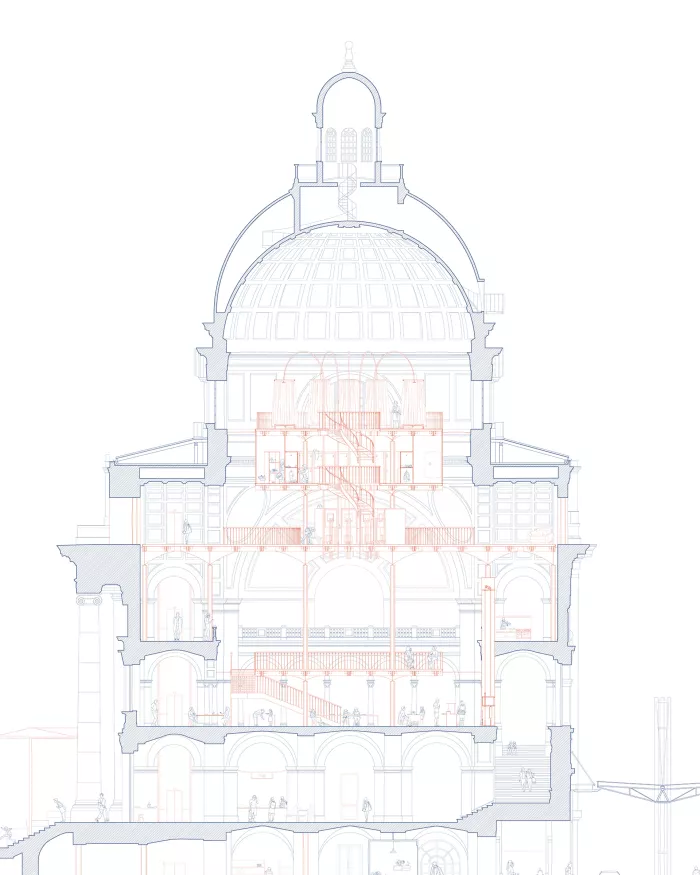
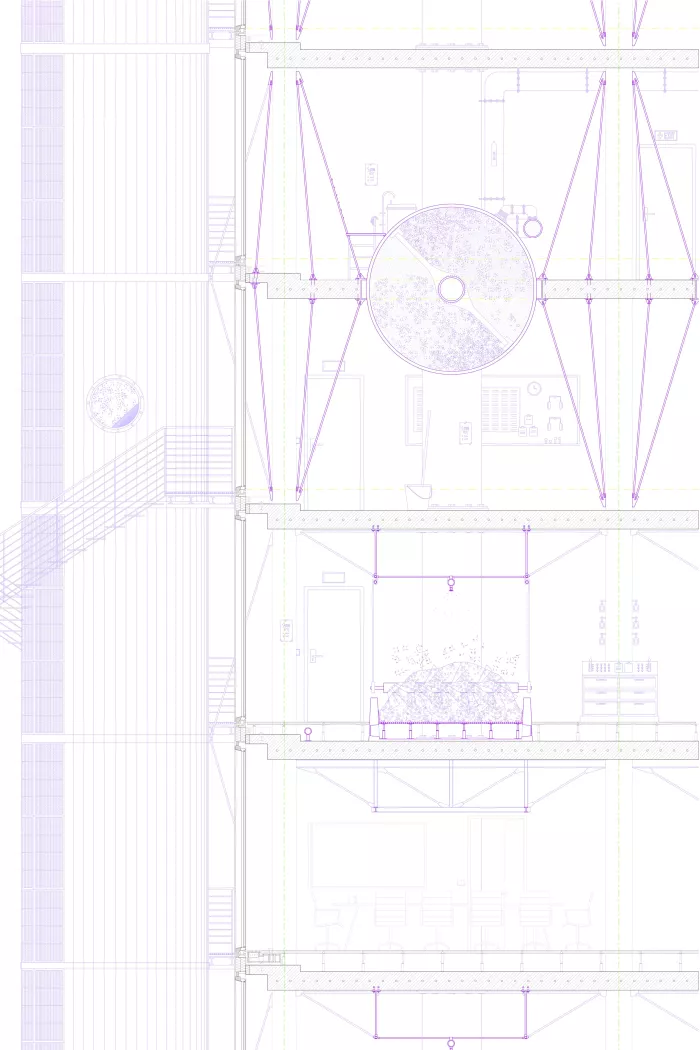
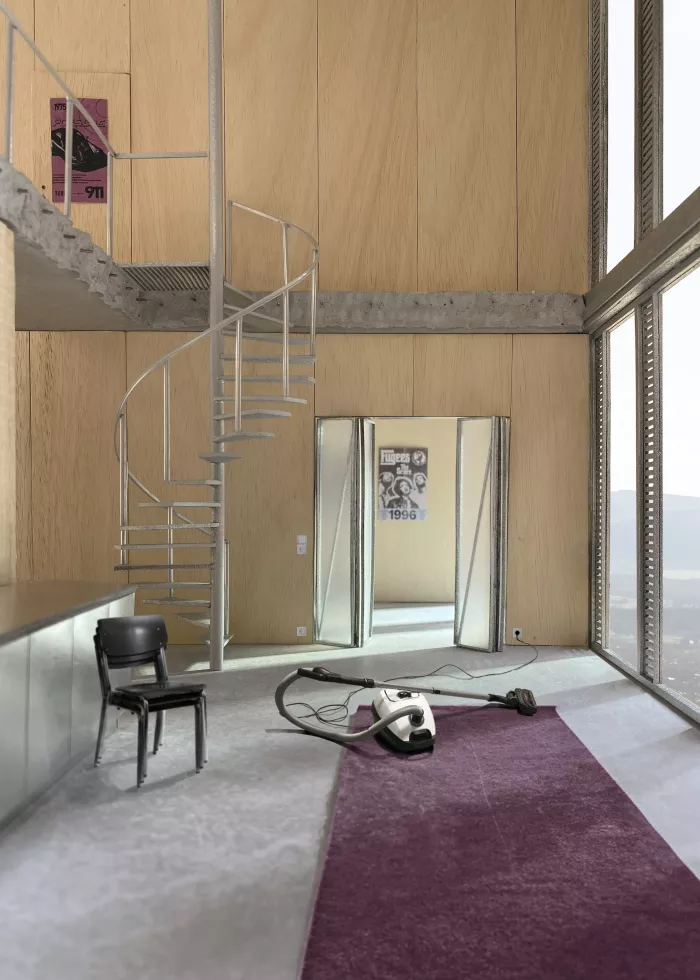
Pristine sites in Munich were chosen to be invaded by one type of dirt: Bavaria’s parliament, the hi-tech Highlight Towers, the newly finished Friends Towers and the “famous” shopping mall Oberpollinger. The resulting projects showed that letting go can sometimes be productive. The Highlight towers turned into a soil recycling plant, the Friends Towers into the biggest flatshare of Munich, The parliament welcomed a new topography of democratic discussions and the hidden coulisses of the Oberpollinger turned into student housing.
Axel Chevroulet
Lena Kirsch
Anna MacIver-Ek
Artai Sanchez
Elisa Romberg
Serafina Andrione
Benjamin Barbera Cortada
Johannes Scholl
Constanza Sobejano Figuerola
Franca Lilian Rudolph
Lukas Simon Trischler
Ismaël Sow
Emma Seidel
Dominique Konrad
Sofia Alt Motta
Luca Overbeck Valls
Ruben Winter
Arthur Hichert
Leon Wipfler
Tina Heusinger
Elsa-Sidonie von Mallinckrodt
Mialotta Wöhner
Aysel Rzayeva
Farah Hamdan
Viktoria Sturm
Josepha Schmidt
Beatrice Alouette Josepha Borggreve
Anna-Giulia Grasso Menke
Bernhard Salchegger
Hendrik Weber
Helene Schönebaum
Laurent Gruson
Livia Walther
Louise Amstutz
Joana Apostoli
Diana Vicheva
Viktor Höricht
Tobias Trübenbacher
Till Gebauer
Laurin Geiger
Lukas Flierl
Elina Tensi
David Wozniak
Sonya Nanami Fritz
Bernhard Fankhauser
Daniel Gaar
Technische Universität München TUM
Summer Semester 2024
Mop the floor, seal that crack on the wall, burn the weed that’s growing in the corner, close the window the wood will get wet, cover up the graffiti, don’t let the dog in.
Sanitation as an excuse for exclusion. Cities developed against nature: dry the marshland, lay down asphalt, put the sick and the dead away, build a wall the foreigners might be dangerous. Sure, hygiene is to some extent a need, yet it also excels at pushing the other aside, the unwanted or unvalued. Mankind and its longing to dissociate itself from the animal: culture versus nature, work versus labour. A way of asserting its dominance or a desperate attempt to escape its condition.
Our age might be defined by our cleaning frenzy. Every client will ask at some point “yes but, is it easy to
clean?” Isn’t the easiest building to clean the one that doesn’t need to be? Do you vacuum a meadow? We’ve spent centuries cleaning and organising our environment. Now the streets are either flooded or too hot, scientists develop artificial alternatives to the dying bees, birds make their nests in the crumbly Styrofoam, ventilation units are installed and window handles removed, desynchronised sensors close the shutters when I want to look at the sunset.
This semester, we play with dirt. An excuse to explore an architecture that welcomes its environment rather than seeks to be secluded from it. Unseal the floor, let the outside in, exhibit the water running through the house instead of hiding it in pipes, value the waste on site instead of shipping it out of sight, let the dog (and its friends) back in, they can jump on the couch, no one will die from it.
Germs, decay, noise, fat, weeds, mould, draught, damp, pets, shit, soil, smell, mess and dust. Each group received their dirt. Starting by a research folder, they set up an experiment that would develop throughout the semester. Harvesting germs from Munich’s metro stations, recreating the city’s building history through the fragments of bricks that are found in the river, feeding and documenting weeds, or shaping hats out of the dust collected in the school building.
Pristine sites in Munich were chosen to be invaded by one type of dirt: Bavaria’s parliament, the hi-tech Highlight Towers, the newly finished Friends Towers and the “famous” shopping mall Oberpollinger. The resulting projects showed that letting go can sometimes be productive. The Highlight towers turned into a soil recycling plant, the Friends Towers into the biggest flatshare of Munich, The parliament welcomed a new topography of democratic discussions and the hidden coulisses of the Oberpollinger turned into student housing.
Axel Chevroulet
Lena Kirsch
Anna MacIver-Ek
Artai Sanchez
Elisa Romberg
Serafina Andrione
Benjamin Barbera Cortada
Johannes Scholl
Constanza Sobejano Figuerola
Franca Lilian Rudolph
Lukas Simon Trischler
Ismaël Sow
Emma Seidel
Dominique Konrad
Sofia Alt Motta
Luca Overbeck Valls
Ruben Winter
Arthur Hichert
Leon Wipfler
Tina Heusinger
Elsa-Sidonie von Mallinckrodt
Mialotta Wöhner
Aysel Rzayeva
Farah Hamdan
Viktoria Sturm
Josepha Schmidt
Beatrice Alouette Josepha Borggreve
Anna-Giulia Grasso Menke
Bernhard Salchegger
Hendrik Weber
Helene Schönebaum
Laurent Gruson
Livia Walther
Louise Amstutz
Joana Apostoli
Diana Vicheva
Viktor Höricht
Tobias Trübenbacher
Till Gebauer
Laurin Geiger
Lukas Flierl
Elina Tensi
David Wozniak
Sonya Nanami Fritz
Bernhard Fankhauser
Daniel Gaar